
As an editor in the packaging industry, I have reviewed countless materials. For years, the market has been dominated by plastic bubbles, foam peanuts, and non-recyclable cushions. However, a quiet revolution is unfolding on packing benches across the globe. It involves a material that is as strong as it is sustainable: honeycomb wrapping paper.
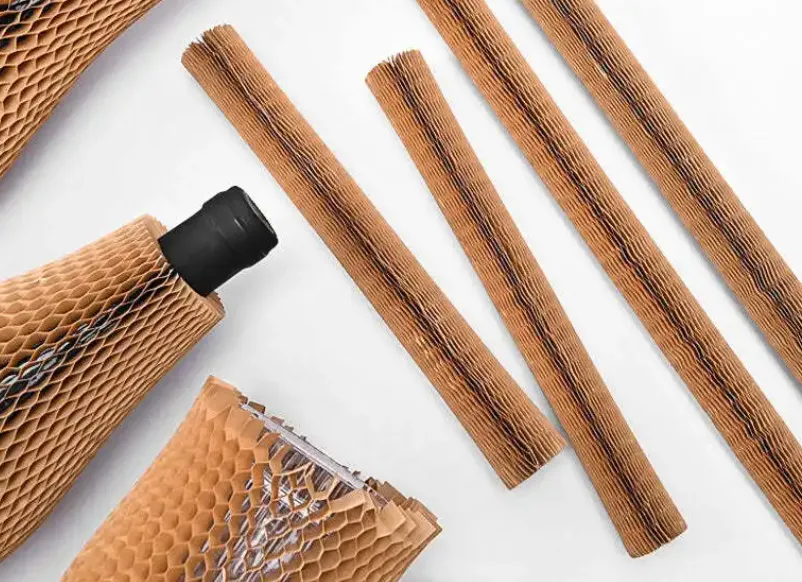
At first glance, it looks like simple kraft paper rolled onto a core. But when stretched, it transforms into a three-dimensional hexagonal structure. This is not just paper; it is engineering. Based on insights from industry leaders like YJNPACK (airpowerpak.com), honeycomb wrapping paper is rapidly replacing petroleum-based products. In this article, we will explore why this material is the most viable alternative for modern supply chains.
What Exactly is Honeycomb Wrapping Paper?
Before diving into benefits, let us define the product. Honeycomb wrapping paper is a expandable paper material made from recycled kraft paper. It starts as a flat roll. When you pull the edges, the internal slits open up to form a hexagonal pattern—much like a beehive.
This geometric design is nature’s most efficient shock absorber. Unlike traditional tissue paper, honeycomb wrapping paper offers vertical strength. It holds its shape under pressure, creating an air cushion that protects fragile items. According to the supplier data, each roll of honeycomb wrapping paper comes with a batch number for quality tracing. This ensures that every batch meets the high standards required for commercial shipping.
The Environmental Urgency: Zero Plastic, Zero Guilt
The primary driver for switching to honeycomb wrapping paper is environmental responsibility. Standard plastic bubble wrap can take 500 years to decompose. In contrast, honeycomb wrapping paper is 100% compostable, biodegradable, and recyclable.
When you use honeycomb wrapping paper, you are removing “ghost plastic” from the waste stream. The material is made from 0% pollution raw materials. Data from North American markets suggests that by switching to honeycomb wrapping paper, brands have reduced their plastic usage by 60% to 80%. For a company trying to meet ESG (Environmental, Social, and Governance) goals, honeycomb wrapping paper is not just an option; it is a necessity.
The Unboxing Experience: Aesthetic Meets Protection
We live in the age of the “unboxing video.” How your product arrives is part of the brand story. Honeycomb wrapping paper creates a premium aesthetic. The golden-brown kraft texture feels organic and luxurious.
Unlike black plastic bags, honeycomb wrapping paper looks intentional and expensive. It enhances the customer impression immediately. When a customer pulls an item wrapped in honeycomb wrapping paper out of a box, they see effort and care. It tells a story of sustainability. For e-commerce brands, switching to honeycomb wrapping paper is a marketing move that pays for itself through customer loyalty.
Dispenser Systems: Efficiency in Every Pull
One of the biggest objections to sustainable packaging is usually speed. Is it faster than plastic? With honeycomb wrapping paper, the answer is yes. The introduction of the Box Honeycomb Paper Dispenser has changed the game.
This system is a 100% sustainable desktop tool. It requires no electricity, no maintenance, and almost no assembly. You simply place the roll of honeycomb wrapping paper inside the box. You pull the paper out, and it automatically expands into the honeycomb structure. Because the material has super sticky self-adhesive properties (or simply interlocks), you do not need tape. You just tear it by hand.
Using a dispenser, honeycomb wrapping paper can increase packaging efficiency by at least 30%. It is a “pull, roll, and tear” operation. For packing stations handling high volumes, this speed is invaluable.
Strength in Structure: Protecting Odd-Sized Items
Plastic wrap fails when it comes to odd shapes. Try wrapping deer antlers, wine bottles, or oddly shaped electronics in bubble wrap; it usually leaves gaps. Honeycomb wrapping paper solves this problem through flexibility.
Because honeycomb wrapping paper is soft and elastic, it conforms to the shape of the object. You can tightly wrap oversized or irregular items. The 3D honeycomb structure wraps around corners and curves. It provides strong cushioning without external scratches. For glass products, such as red wine bottles, honeycomb wrapping paper sleeves are the safest choice. They keep the bottle intact during storage and transport, acting as a decorative sleeve that stays on the bottle even when stored at home.
Honeycomb Padded Mailers: The Envelope Evolved
Beyond rolls, honeycomb wrapping paper is now being integrated into mailers. The honeycomb padded mailer is a sustainable alternative to the classic bubble envelope.
These mailers look like standard poly mailers on the outside, but the interior is lined with honeycomb wrapping paper. This provides the cushioning needed for cosmetics, books, and small electronics without a gram of plastic. The inner liner is made of tightly interlaced honeycomb wrapping paper that absorbs shock. Plus, these mailers offer water resistance. They are accepted in standard paper recycling streams (curbside recycling), making the disposal process seamless for the end consumer.
Cost Analysis: Saving Money While Saving the Planet
There is a common misconception that sustainable packaging is expensive. However, honeycomb wrapping paper often reduces total packaging costs. How? It eliminates the need for multiple materials.
When using honeycomb wrapping paper, you do not need separate tape, bubble wrap, or foam peanuts. One material does it all. Furthermore, the lightweight nature of honeycomb wrapping paper reduces dimensional weight (DIM weight) for shipping carriers. Lighter packages cost less to ship. Because the paper is compressed tightly on the roll, storage costs are lower than bulky foam. For wholesalers, buying honeycomb wrapping paper factory direct (as offered by YJNPACK) provides “large stock, ready to ship” benefits at factory prices.
Application Deep Dive: From Wine to Industrial Parts
Let’s look at specific use cases where honeycomb wrapping paper excels:
Wine and Spirits: Glass is fragile. Honeycomb wrapping paper sleeves slip right over the bottle. They protect against clinking during transit. Unlike foam, these sleeves look beautiful on a gift recipient’s counter.
E-commerce Cosmetics: Foundation bottles and serums need to survive drops. Honeycomb wrapping paper provides the shock absorption needed to prevent leaks.
Furniture and Frames: For wooden furniture, plastic can trap moisture. Honeycomb wrapping paper is breathable, preventing condensation while protecting edges.
Industrial Parts: Metal components prone to scratching can be layered with honeycomb wrapping paper to prevent friction damage.
In every scenario, honeycomb wrapping paper adapts. It is the multi-tool of the packaging world.
How to Use Honeycomb Wrapping Paper Correctly
To maximize the potential of honeycomb wrapping paper, you must use it correctly. Here is a quick guide:
Pull: Place the roll in the dispenser. Pull out the desired length of honeycomb wrapping paper.
Stretch: As you pull, the paper will naturally expand into the honeycomb shape. Do not overstretch; let the structure form organically.
Wrap: Place your item in the center of the honeycomb wrapping paper. Fold the sides up.
Secure: Press the paper against itself. The fibers of the kraft paper interlock. For heavy items, the self-adhesive properties (static cling of paper fibers) will hold it in place.
Tear: Use the dispenser edge to tear the honeycomb wrapping paper cleanly. No scissors required.
Ship: Place the wrapped item into a cardboard box. Because the honeycomb wrapping paper fills voids, the item will not shift.
Customization and Branding
One of the standout advantages available today is customization. Suppliers now offer honeycomb wrapping paper with logo printing. Imagine your brand logo repeated across a beautiful kraft paper backing.
This turns your packaging into a marketing asset. When a customer receives a box filled with honeycomb wrapping paper emblazoned with your logo, the perceived value of the product increases. Furthermore, customization does not sacrifice sustainability. The inks used are usually water-based or soy-based, ensuring the honeycomb wrapping paper remains fully recyclable.
Comparing to Traditional Materials
Let us put honeycomb wrapping paper head-to-head with plastic bubble wrap.
Protection: Plastic bubble wrap offers point protection. Honeycomb wrapping paper offers surface protection via structural engineering. Tie: Both protect well, but honeycomb handles heavy weight better due to vertical load capacity.
Environmental Impact: Plastic is trash. Honeycomb wrapping paper is compost. Winner: Honeycomb.
User Experience: Plastic is slippery and requires tape. Honeycomb wrapping paper grips itself and tears easily. Winner: Honeycomb.
Storage: Both store flat. However, honeycomb wrapping paper degrades less over time than plastic, which becomes brittle.
The evidence is clear. Honeycomb wrapping paper outperforms plastic in nearly every category except for waterproofing (though new coated versions are solving this).
The Future of the Supply Chain
As we look toward 2025 and beyond, legislation against single-use plastics is tightening globally. The EU, Canada, and several US states are banning plastic packaging. Honeycomb wrapping paper is positioned to fill this gap perfectly.
Major brands are switching their entire logistics chains to honeycomb wrapping paper. It aligns with circular economy models. It is “curbside recyclable,” meaning the consumer doesn’t have to drive to a special drop-off point. They just put the honeycomb wrapping paper in their normal paper recycling bin.
Furthermore, the rise of at-home businesses and small packing stations has created a demand for easy, professional tools. The desktop honeycomb wrapping paper dispenser is ideal for home offices and small packing stations because it is low-cost and simple.
Conclusion
In conclusion, honeycomb wrapping paper is not a trend. It is the logical conclusion of years of material science focused on sustainability. It provides the necessary cushioning for fragile items like wine bottles and electronics, while simultaneously reducing your carbon footprint.
If you are a business owner, switching to honeycomb wrapping paper will improve your unboxing experience, reduce your plastic tax, and streamline your packing process. The technology is ready. The dispensers are efficient. The material is available.
We have reached a point where convenience no longer has to come at the cost of the planet. With honeycomb wrapping paper, you can have speed, strength, and sustainability in one roll. Tear the plastic tape. Pull the paper. Protect the future. It is time to let honeycomb wrapping paper define the new standard of care.